
Xtru-IQ
Know the Limit
Reach the Optimum
Every aluminum extrusion has a limit.
The challenge is knowing where that limit is, what is causing it, and how close you can safely operate to it.
Xtru-IQ combines software, engineering, automation, training, and continuous improvement to identify the true operating limits of each extrusion and guide your team toward the optimum.
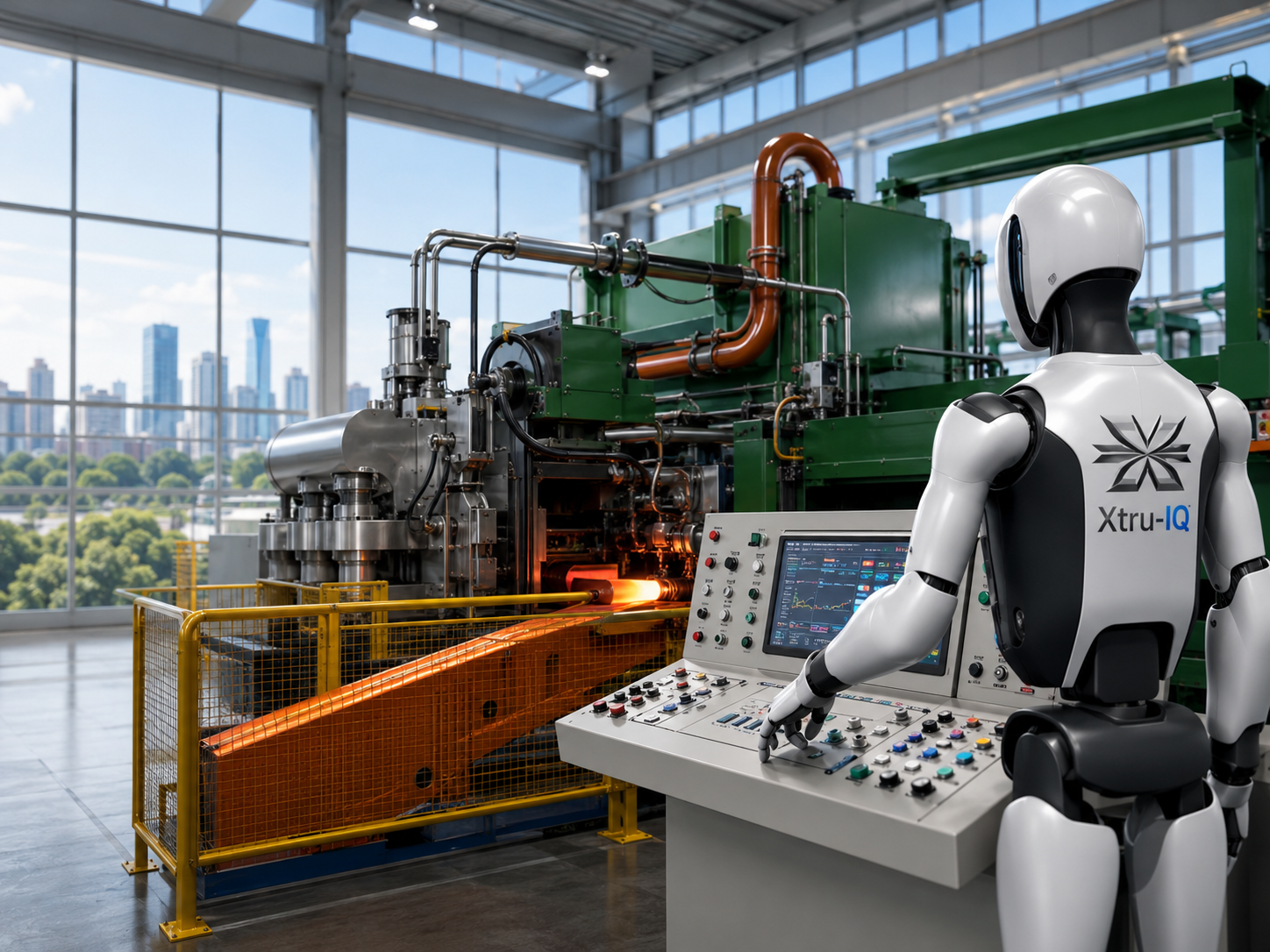
More than Software: A Proven Methodology
Xtru-IQ is not simply software we install. It is a proven approach we implement with your team.
The work combines process intelligence, extrusion engineering, automation, training, and continuous improvement to systematically:
the Limit
the Optimum
the Constraint
the Limit
We implement a methodology designed to continuously improve extrusion performance.
We don't install software and walk away
Before implementation, XtruAdvance assesses the extrusion operation to identify equipment, process, and operational constraints.
Before implementation…
Implementation is only the beginning. For weeks and months after launch, XtruAdvance works side by side with your team through frequent performance reviews—monitoring results, identifying constraints, guiding optimization, and helping your team continuously improve extrusion performance.
After launch…
Know Your Operating Limit
Aluminum extrusion operates at the intersection of temperature, metal flow, pressure, alloy behavior, die performance, and equipment capability.
And those limits are not fixed
Xtru-IQ continuously evaluates the Extrusion Limit Diagram—the operating window for each profile and production condition.
How close are you to the press, tooling, and equipment limits?
How close are you to the thermal conditions that can affect quality and process stability?

The temperature measured after the profile exits the die does not tell the complete story.
The highest metal temperature can occur inside the die, where conventional sensors cannot measure it directly.
Xtru-IQ uses process data and engineering algorithms to estimate this peak temperature and determine proximity to the metallurgical limit.
See the Temperature You Cannot Measure
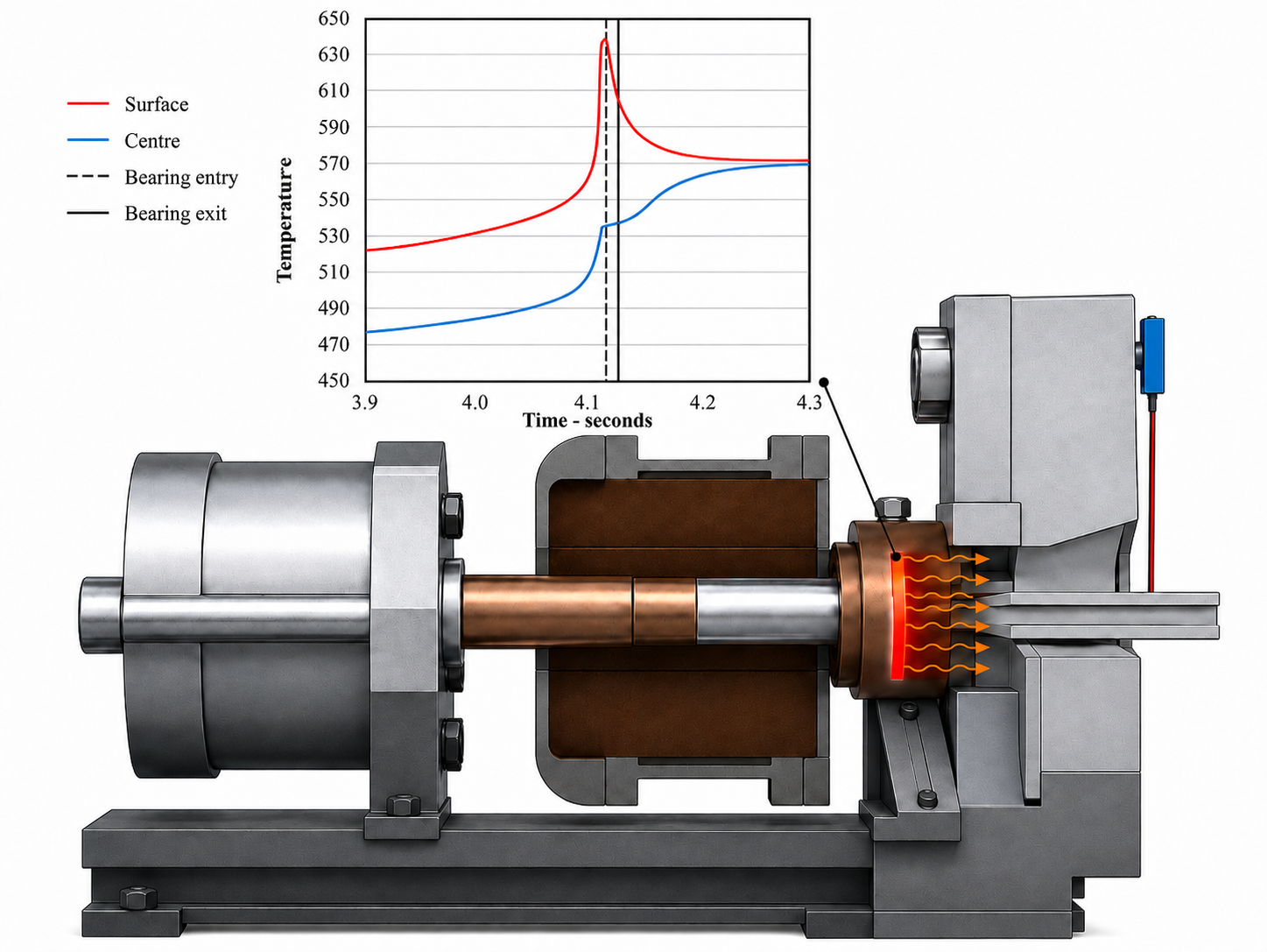
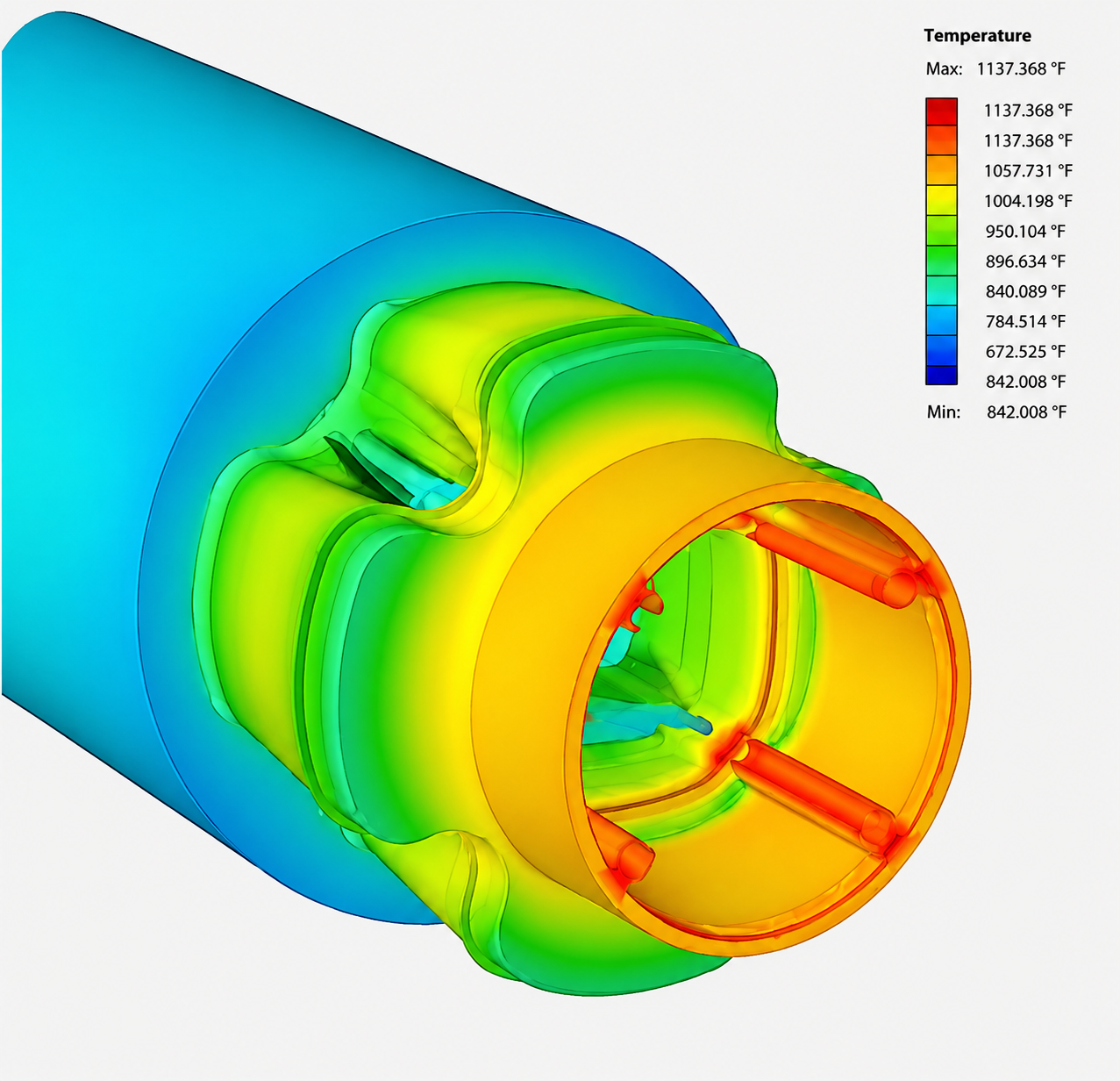
This allows Xtru-IQ to optimize ram speed throughout the extrusion cycle—running faster when thermal capacity is available and controlling speed as the metallurgical limit is approached.
Concept illustrated based on findings presented in “What Does Exit Temperature Measurement Tell Us?”
Control where necessary.
Reach the Optimum
The objective is not simply maximum speed.
It is the maximum sustainable performance that respects metallurgical quality, press capability, tooling limitations, and process stability.
This enables an isothermal-oriented extrusion strategy designed to extract more productivity from every cycle.
Once Xtru-IQ understands the operating window, it guides production toward the best sustainable combination of:
Then Expand the Limit
Reaching today's optimum is only the beginning.
Xtru-IQ continuously identifies what is preventing the next level of performance.
limited?
limited?
limited?
limited?
limited?
Xtru-IQ turns these constraints into actionable improvement priorities.
Working with XtruAdvance and XtruAutomation, your team can systematically address bottlenecks and expand the operating window over time.
Reach the current optimum. Then create a better one.
Optimize Even Difficult Extrusions
Not every die should be pushed toward maximum press pressure or maximum temperature.
Complex hollows, thin tongues, small mandrels, deep channels, asymmetric profiles, and other difficult dies require different optimization strategies.
Xtru-IQ recognizes these additional constraints and helps determine the highest sustainable performance appropriate for each extrusion.
Because the optimum is not always the maximum.
Build Better Recipes
Xtru-IQ transforms recipe management from a collection of historical settings into a continuous learning system.
Critical process parameters—including billet temperature, ram speed, pressure, exit temperature, estimated peak temperature, and operating limits—are continuously incorporated into the optimization process.
the recipe.
the recipe.
a new limitation.
Over time, Xtru-IQ builds a stronger, standardized extrusion knowledge base and reduces dependence on individual experience.
See What Is Really Limiting Performance
Xtru-IQ monitors cycle performance, dead time, downtime, utilization, process interruptions, and equipment constraints to identify what is truly limiting production.
Press speed is controlled not only by the mechanical limits of the equipment and the metallurgical limits of the extrusion, but also by the capacity of downstream processes.
For example, Xtru-IQ evaluates saw capacity for every production recipe and determines the maximum sustainable production rate. If the press can extrude faster than the saw can process the material, the system recognizes the downstream constraint and limits the production rate accordingly.
This prevents material from accumulating on the handling table, reducing the risk of production interruptions, jams, dents, scratches, and unnecessary scrap.
The objective is not simply to run the press faster. It is to operate the entire
extrusion line at the highest sustainable rate while protecting quality, equipment, and process stability.
Xtru-IQ also evaluates performance billet by billet. The system distinguishes when production is operating at the established optimum from when performance is being restricted by special operational conditions, process constraints, or equipment limitations.
When the optimum cannot be reached, Xtru-IQ provides a clear account of the lost production opportunity—showing where performance was constrained and helping quantify the gap between actual production and the achievable optimum.
Management gains visibility not only into how the plant is performing, but more importantly, what is preventing better performance. Improvement resources can then be directed toward the constraints with the greatest operational and financial impact.
The primary return from Xtru-IQ comes from higher productivity, better process control, and improved equipment utilization.
But the structured experimentation, process development, and engineering activities associated with optimization may also qualify for R&D tax incentives, depending on jurisdiction and eligibility.
XtruAdvance can help identify and document potentially qualifying activities—creating the possibility of an additional financial return from the engineering work already being performed to improve the extrusion process.
Engineering That Can Deliver a Second Return
One Methodology. Four Integrated Capabilities.
Xtru-IQ brings together capabilities that are normally separated.
Identifies operating limits, monitors production conditions, guides optimization, and builds process knowledge.
Assesses the operation, analyzes constraints, develops improvement priorities, and provides ongoing technical support.
Connects the methodology to press controls, PLCs, equipment, sensors, and automation systems.
Develops the technical understanding required for operators, engineers, supervisors, and management to sustain the improvements.
Together, they create something larger than software:
A Proven Extrusion Optimization Methodology.
Know the Limit. Reach the Optimum.
The Xtru-IQ methodology creates a continuous improvement cycle:
Know the Limit → Reach the Optimum → Identify the Constraint → Expand the Limit → Repeat.
More Than Software. A Proven Methodology for Aluminum Extrusion.
Start a conversation
What is limiting your extrusion operation?
- Confidential initial conversation
- Technical and executive perspective
- Practical next-step recommendation
Bring the press constraint, quality issue, training gap or growth objective. We’ll begin with the problem and define the most useful next step.